
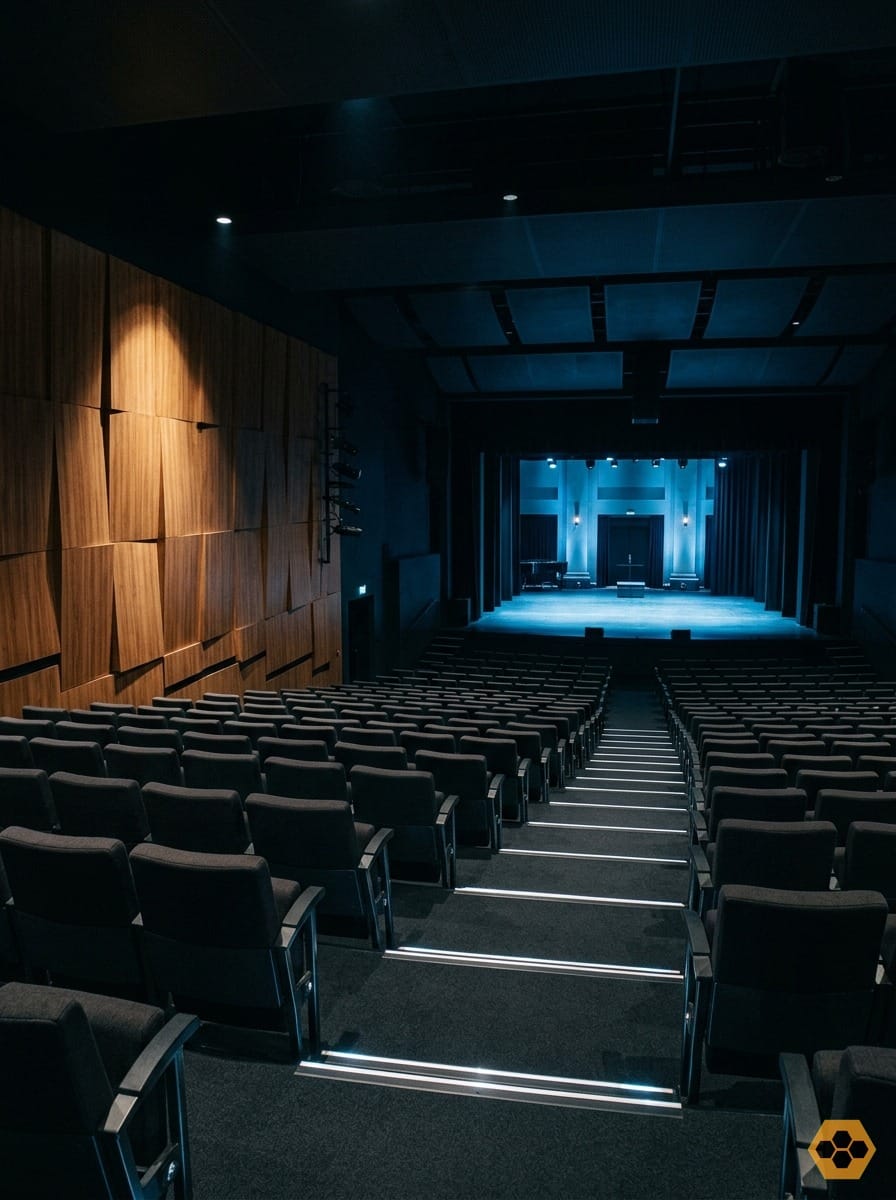
Theater and Conference Halls Audio Systems and Acoustics
We deliver end-to-end solutions focusing on speech intelligibility and stage dynamics through precise electroacoustic design, simulation, and system calibration.
Theater Acoustic Design and Audio System Integration
In auditorium acoustics and conference hall sound system projects, balancing speech intelligibility with musical dynamics is the main goal. By controlling long reverberation times (RT60), we solve reflection issues between the stage and the audience area through the harmony of architecture and electroacoustics.
In multi-purpose halls with variable usage scenarios, we provide homogeneous coverage with RAM Audio and Celto Acoustique systems. We secure optimum hearing standards in your projects with our comprehensive acoustic engineering services covering EASE simulations and RT60 measurement processes.

Frequently Asked Questions
Answers to common questions regarding the acoustic design and sound system configuration of conference hall, theater, and auditorium projects.
How are conference hall sound system costs determined?
The system budget varies based on the hall volume, intended use, architectural features, and preferred Celto Acoustique equipment. To create an accurate budget, our expert engineers conduct an on-site discovery, analyze your needs, and provide a detailed, project-specific proposal.
What is the importance of the STI value in auditorium acoustics?
The Speech Transmission Index (STI) is a critical metric indicating how clearly speech is understood by listeners. In conference and educational halls, this value is targeted to be 0.60 or higher. Lower STI values lead to listener fatigue and communication breakdowns.
Which software do you use in theater acoustic design processes?
By transferring the architectural structure to a digital environment, we perform detailed analyses using EASE simulation software. This allows us to project sound reflection angles, absorption rates, and homogeneous distribution before construction to prevent potential issues.
How are RT60 measurement results evaluated in multi-purpose halls?
Since both speech and musical performances take place in multi-purpose halls, the reverberation time (RT60) must be balanced. Shorter times are needed for speech, and longer times for music. Based on RT60 results, we provide solutions with variable acoustic panels or presets.
Why should architectural and electroacoustic design run together?
Using high-quality equipment alone does not solve acoustic problems. The sound reflection or absorption characteristics of architectural surfaces directly affect speaker performance. Integrating these two disciplines eliminates echo issues and ensures maximum system efficiency.
How is the balance between stage monitoring and hall coverage achieved?
The hearing of speakers or artists performing on stage and the sound level in the audience area must not interfere. With correctly positioned directional speakers and precise DSP settings of RAM Audio amplifiers, we prevent feedback risks on stage and ensure clear audio.
Contact Us for Your Auditorium and Conference Projects
Contact our team to get engineering support for your hall projects that require architectural acoustic and electroacoustic integration.